


Use brushing when surface emotion matters
The raised nap can support a cozy, soft and visually warm product direction, especially where the buyer values touch and halo over crisp texture.

Views: 0 Author: Site Editor Publish Time: 2026-11-23 Origin: Site


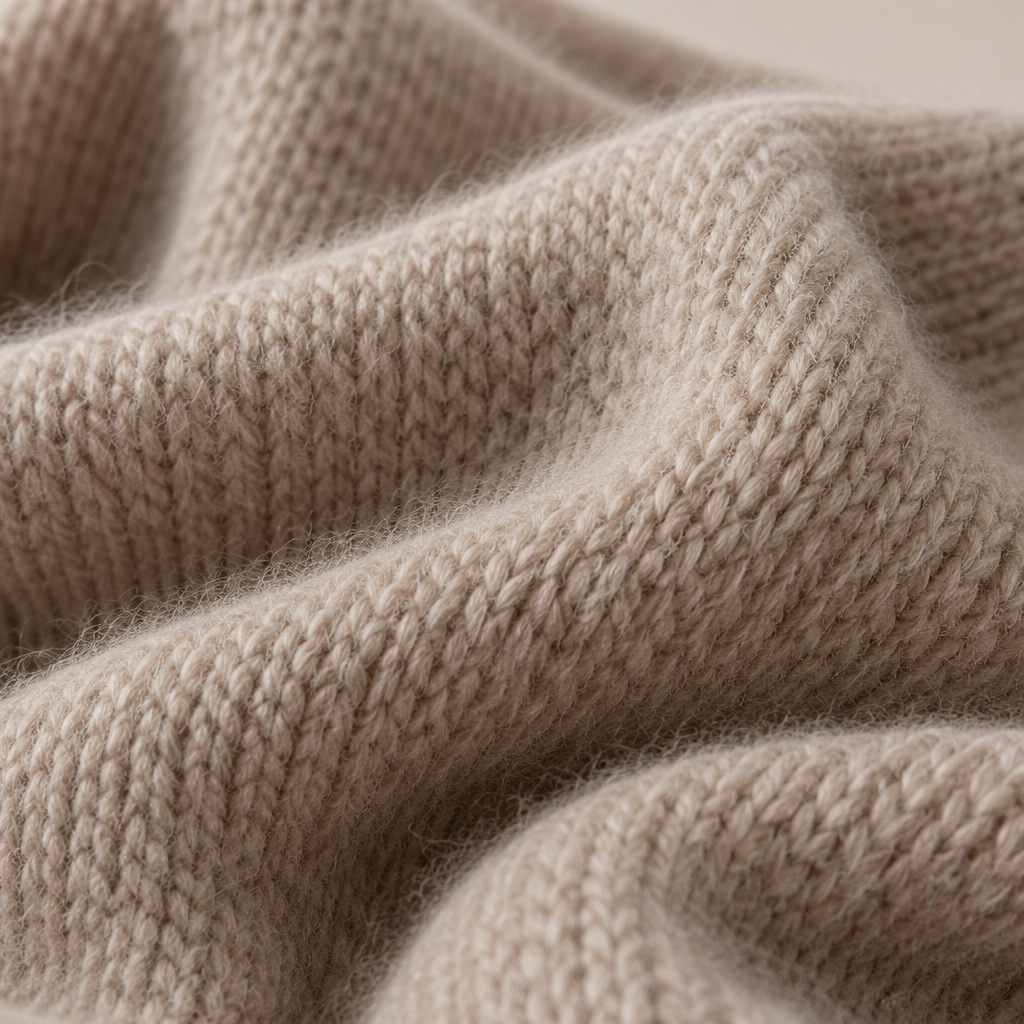
Brushing, also called raising or napping in textile finishing, lifts fibers from the fabric surface to form a soft nap rather than changing the underlying knit into a different fiber or construction.
Do not treat brushing as a substitute for yarn specification, knit construction, fiber-content verification or tested performance. It is a surface finish, so sourcing teams should evaluate the finish together with yarn, gauge, sample approval and batch controls.
Brushing changes appearance by adding a soft halo and changes hand feel by raising surface fibers, but it can also blur stitch definition and make the surface more sensitive to wear.
| Decision point | Cleaner knit finish | Brushed cashmere finish |
|---|---|---|
| Visual character | Clearer stitch lines and a flatter surface. | A raised nap gives a softer, warmer-looking surface and may reduce the sharpness of stitch definition. |
| Hand feel | More dependent on yarn, knit density and finishing without a pronounced fuzzy layer. | Surface fibers are lifted, so the hand can feel fuller and softer at first touch. |
| Style suitability | Useful where clean texture, pattern clarity or a smoother surface is the design priority. | Useful where the buyer wants a relaxed, tactile, premium-looking halo effect. |
| Approval focus | Check dimensions, stitch appearance, seams and general hand feel. | Add nap level, surface evenness, loose-fiber appearance and post-handling look to the approval checklist. |
Choose brushed cashmere when the collection needs a soft halo and tactile surface; choose a cleaner finish when sharp stitch definition, lower surface fuzz or easier appearance maintenance is more important.
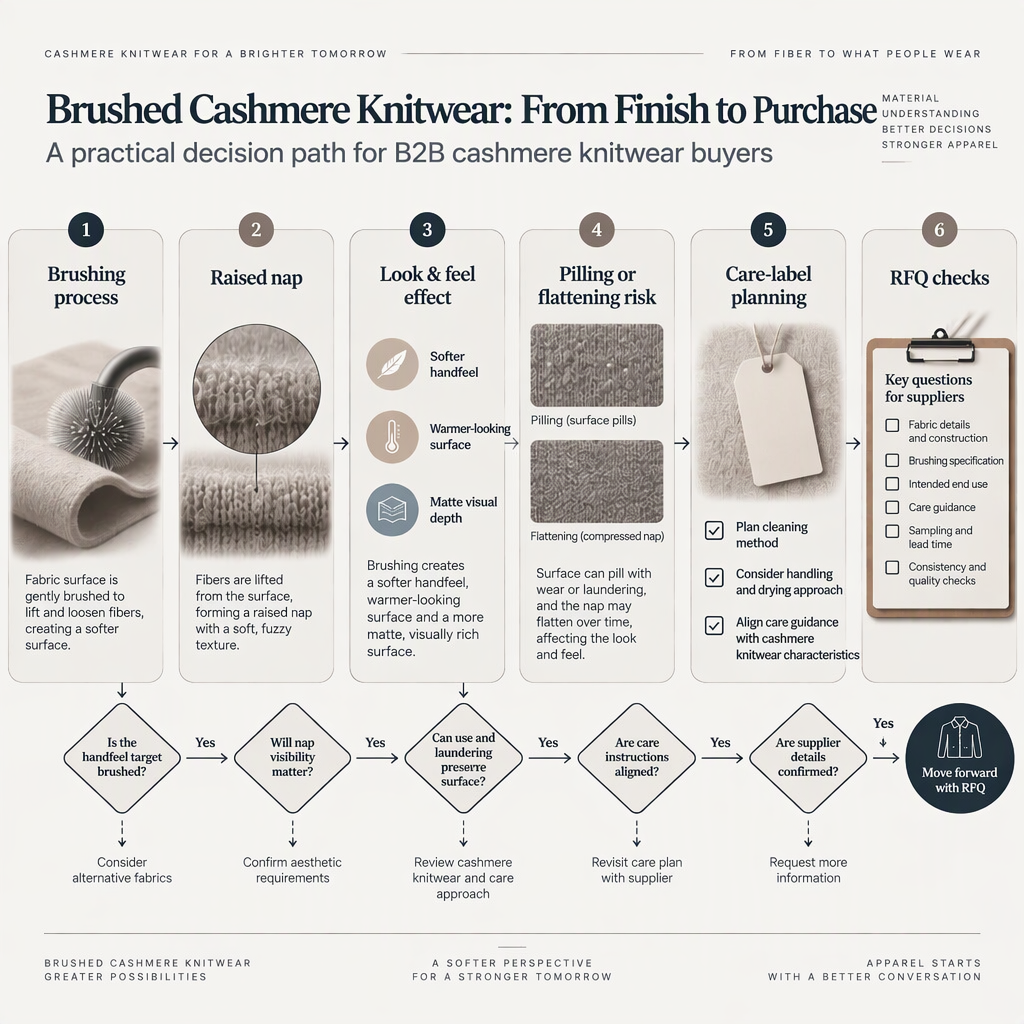
| Buyer scenario | Brushed cashmere fit | What to confirm before sampling |
|---|---|---|
| Relaxed premium sweaters, cardigans or turtlenecks | Often suitable when a soft raised surface supports the design story. | Nap level, yarn count, knit gauge, garment weight, brushing intensity and sample approval criteria. |
| Styles with cables, ribs or detailed stitch patterns | Use carefully because a raised nap can visually soften surface definition. | Whether the stitch detail remains clear after brushing and after handling. |
| Everyday high-friction wear areas | Plan additional scrutiny because napped surfaces can pill, abrade or flatten more readily. | Wear-test plan, pilling assessment, abrasion areas and buyer-acceptable surface change. |
| Retail programs needing simple care communication | Care expectations should align with the garment care label and general wool knitwear care principles. | Final care label, washing method, drying instructions, storage guidance and aftercare wording. |
The raised nap can support a cozy, soft and visually warm product direction, especially where the buyer values touch and halo over crisp texture.
Because napped fabrics can pill, abrade or flatten, claims about long wear, anti-pilling or retained appearance should be supported by product-specific testing rather than styling language.
The main quality tradeoff is that a raised surface can look and feel luxurious, but it may also be more vulnerable to pilling, abrasion and flattening than a cleaner surface.
Woolmark describes pilling as fuzzy balls that form on a garment surface. For napped or raised surfaces, buyers should treat pilling and flattening as approval topics, not as issues to evaluate only after bulk delivery.
Care planning should protect the raised surface: follow the garment care label, handle knits gently, dry away from direct heat and store folded rather than hung.
For general wool-knitwear care principles, buyers can compare proposed hangtag wording with Woolmark care guidance, while still following the tested care label for the actual garment.
For U.S. selling contexts, brushed styling does not remove the need for accurate cashmere, fiber-content, country-of-origin and safe-cleaning-method labeling.
The Federal Trade Commission’s cashmere guidance under the Wool Products Labeling Act explains when the term cashmere may be used and states that wool-product labels need accurate fiber content, country of origin and a safe cleaning method.
For markets outside the United States, confirm the current textile-labeling, fiber-name, care-label and origin-marking rules that apply in the destination country. Do not use brushing terms, luxury wording or product photography to imply fiber content or performance that is not supported by the product specification and test record.
Before requesting samples, give the supplier enough data to reproduce the intended surface: yarn specification, knit construction, brushing target, sample standard, care route, label requirements and quality tests.
| RFQ field | Why it matters | Buyer output |
|---|---|---|
| Yarn and fiber specification | Cashmere claims and fiber-content labels need to match the actual product. | Approved composition wording and supporting test or supplier documents. |
| Knit gauge and construction | Product pages in this category commonly use gauge and style-configuration language, so buyers should state the construction target clearly. | Tech pack line item and sample reference. |
| Brushing intensity | The finish controls the visible nap and influences surface tradeoffs. | Approved brushed surface standard. |
| Care method | Care instructions should be consistent with how the garment is intended to be washed, dried and stored. | Tested care label and consumer-facing care note. |
| Quality evaluation | Raised surfaces need checks for pilling, abrasion, flattening and appearance after handling. | Inspection checklist and agreed pass criteria. |
Select brushed cashmere when the collection benefits from a soft halo and tactile surface, but approve it with explicit surface, care, pilling and labeling controls.
These questions help sourcing, product-development and quality teams turn the brushed cashmere concept into sample and approval requirements.
It is cashmere knitwear with a raised or napped surface finish. The brushing step lifts surface fibers to create a softer, fuzzier look and hand feel.
No. Fiber-content labeling should reflect the actual material composition; a brushed surface does not by itself justify a cashmere claim or alter required labeling.
Brushing can create a warmer-looking surface and fuller hand, but warmth should not be claimed as a measured performance benefit unless the exact product has supporting test data.
Pilling means fuzzy balls on the garment surface. Because brushed surfaces are raised, buyers should plan pilling evaluation rather than assuming a uniform result across yarns, gauges and finishes.
General wool-knitwear care guidance favors folding knits for storage. Hanging can distort knitwear shape, so storage guidance should be consistent with the tested care label.
For U.S. selling contexts, the label needs a safe cleaning method along with accurate fiber-content and country-of-origin information. Other markets should be checked against their own current rules.
Ask for yarn and gauge details, brushing target, approved surface standard, care route, pilling or abrasion evaluation plan, label requirements and sample approval criteria.


