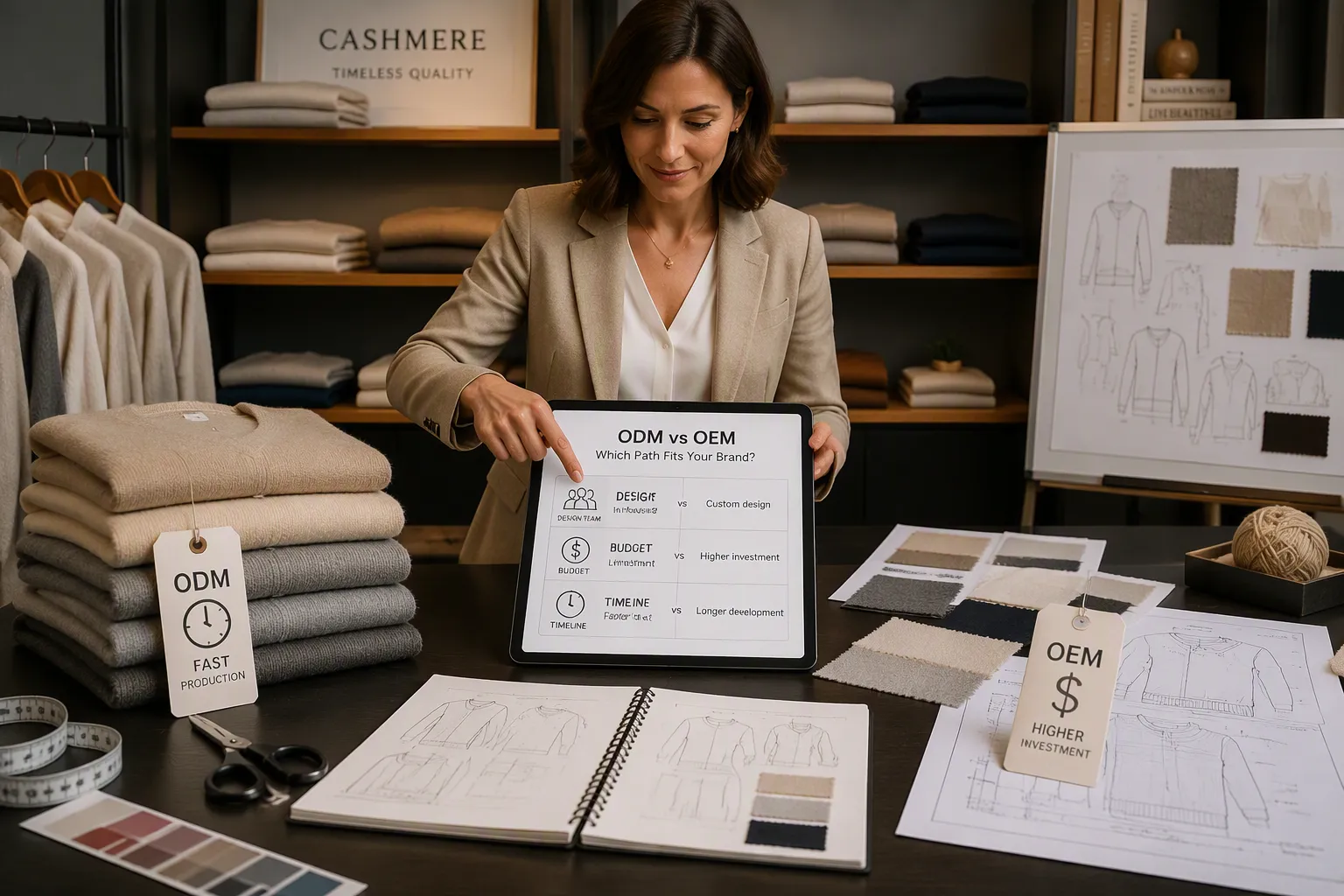
You have a plan for a cashmere line. But how do you make it real? OEM (Original Equipment Manufacturing) means you give the design. ODM (Original Design Manufacturing) means they give the design and you put your brand on it. This article explains the OEM vs ODM choice and points out the key differences for the industry. Your choice affects your startup's money and your brand's unique identity. The global market for cashmere is expected to reach USD 18.29 billion by 2035. This table gives a quick look at the key factors.
Factor
OEM
ODM
Design Ownership
You own the design
Manufacturer owns the design
Customization Level
Full customization
Limited to existing templates
Cost
Higher upfront investment
Lower development costs
Lead Time
Longer (sampling + production)
Shorter (ready designs)
MOQ
Higher (custom yarns)
Lower (stock yarns)
A trusted Cashmere OEM & ODM Manufacturer can help your brand through the process.
Key Takeaways
OEM gives you design ownership and full control. ODM offers speed and lower cost.
Choose OEM if you have a design team and budget. Choose ODM to launch quickly with less risk.
Start with ODM to test the market. Move to OEM later for your signature products.
Your choice shapes your brand identity. OEM builds exclusivity; ODM limits uniqueness.
What Is OEM in Cashmere Apparel Manufacturing
OEM, or original equipment manufacturing, gives your brand control. You own the design and the specs. The factory makes your idea real. This model works well when you know exactly what you want to sell. You bring the plan. They bring the machines and skilled workers.
What the Brand Does in an OEM Partnership
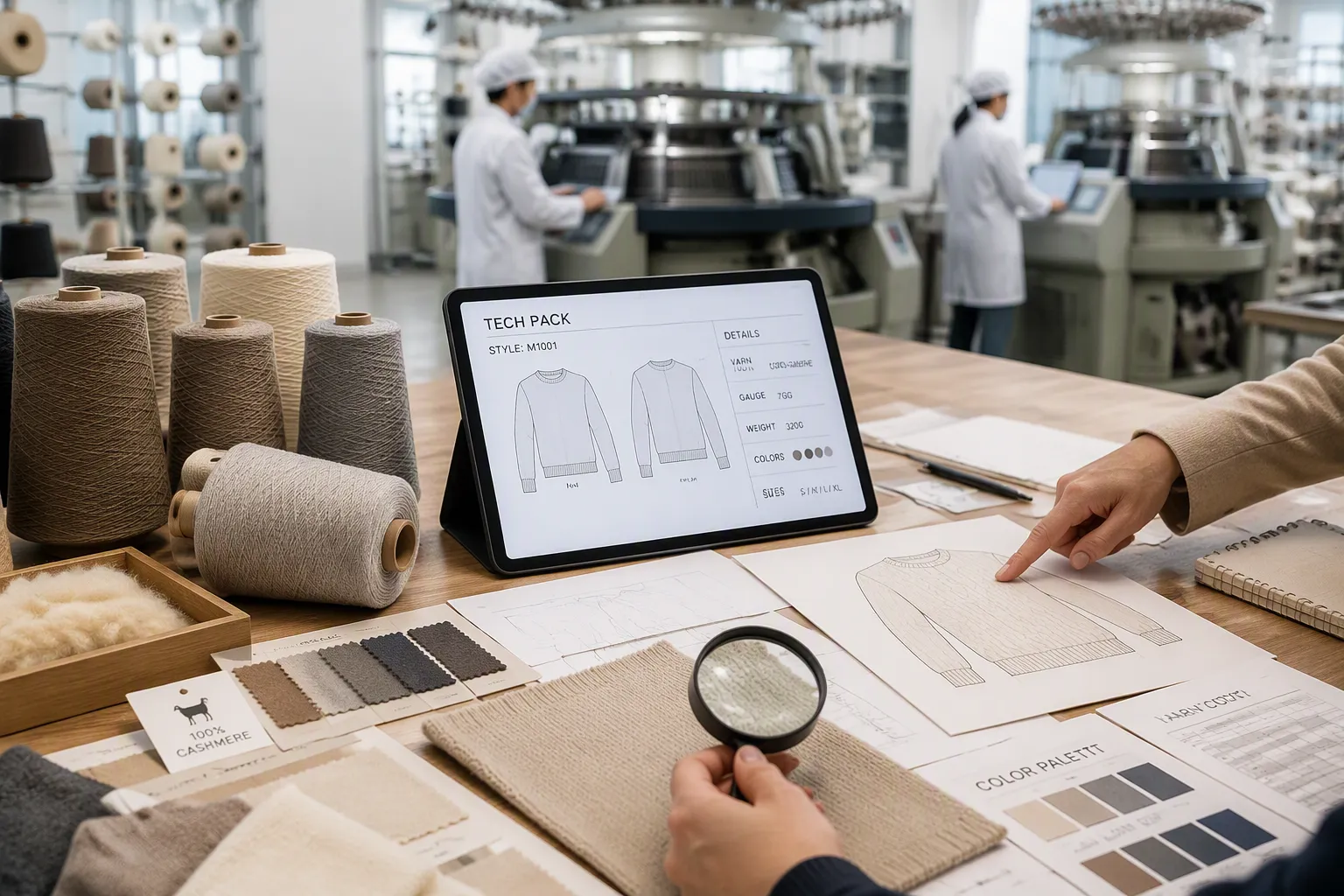
Your brand acts like the architect in an OEM relationship. You create the tech pack. You tell the factory the yarn type, the gauge, the sizes, and the build details. You pick everything from the cuff ribbing to the stitch tightness on the body. The factory follows your instructions exactly.
This much control takes preparation. You need a strong design team or a clear product brief. You must know enough about knitwear to explain your needs clearly. For example, you decide if you want a 12-gauge fine knit or a 3-gauge chunky style. You choose the dye lot for your cashmere yarn. You check and approve every sample before full production starts.
The factory's job is to make it. They buy the raw materials you ask for. They set up the knitting machines. They do the linking, washing, and finishing. They check quality at each step. Your brand stays in charge the whole time.
Key Traits of OEM Production
OEM apparel manufacturing has several features that set it apart from other models. First, you get full design ownership. No other brand can sell the same sweater because you created it. This exclusivity gives your label a unique identity.
Second, customization is as high as it gets. You control every detail, from the yarn blend to the button choice. This flexibility works well for brands with a certain style. You can make signature pieces that customers spot right away.
Third, OEM manufacturing needs a bigger upfront payment. Sampling costs, pattern making, and yarn development add up before you see a finished product. Lead times are also longer. Standard bulk orders usually take 30–45 working days. Large orders over 5,000 pieces or complex designs may need 45–60 working days.
Minimum order quantities for OEM apparel manufacturing vary by product. For cashmere sweaters, you might find MOQs between 100–300 units per style and color. The high cost of cashmere yarn keeps setup costs relatively low per unit, which lets some factories accept smaller orders.
MOQ is a production condition, not one set number. The right answer comes after checking the requested route and specs. A single site-wide MOQ would be wrong; the minimum quantity must be confirmed by product and production route, and the quote should state the quantity by style, color, and size.
Quality control depends entirely on your specs. You set the allowed tolerance for measurements. You set the standard for pilling resistance. You choose the finishing treatments. This model works best for brands with a strong design team and a clear vision for a unique product. If you know exactly what you want, OEM apparel manufacturing gives you exactly that.
Understanding ODM in the Cashmere Sector
ODM turns the OEM model upside down. Here, the manufacturer leads the creative work. The factory creates pre-designed styles, picks yarns, and perfects constructions before you even get involved. You come in as the buyer who picks from what is already available. This approach fits brands that need speed or do not have a dedicated design team.
The Manufacturer's Role in an ODM Partnership
In an original design manufacturing setup, the factory serves as both designer and producer. Their in-house team watches fashion trends each season. They find new fabrics, swatches, and accessories to build curated collections. You look through these ready-made options and choose what matches your vision.
The manufacturer handles the hard work. They manage material selection, yarn development, and sample creation. You can ask for custom colors or small-batch dyeing for exact results. You might adjust softness, warmth, or drape by choosing from 100% pure cashmere, blends, or lighter fabrics. Their skilled pattern teams work from your sketches or existing samples to improve silhouettes through multiple sample rounds.
This model gives you access to proven designs without the development cost. A reputable original design manufacturer keeps stock yarns in over 180 colors of high-quality pure cashmere. You skip the expense and wait time of custom yarn dyeing. You simply pick existing shades and move ahead.
Key Characteristics of ODM Production
ODM apparel manufacturing offers clear benefits around cost and speed. Minimum order quantities run much lower than OEM requirements. You might start with just 10 pieces per style for wholesale supply, with flexible distribution across sizes. Stock colors and existing designs typically need only 50–100 pieces. Custom colors on existing styles need 100–200 pieces per color. New design development starts around 200–300 pieces per style.
MOQ depends on the product and production route. A single site-wide minimum would mislead you. Existing wholesale cashmere and newly developed custom products rarely share the same threshold.
ODM manufacturing also shortens your timeline. Since designs and yarns already exist, sampling takes less time. Production starts faster. You can test a new market or launch a capsule collection without months of development.
The trade-off involves exclusivity. Multiple brands can access the same ODM styles. Your brand gains speed and lower barriers, but you give up the unique identity that custom design provides. For startups testing demand or established labels exploring new categories, odm apparel manufacturing offers a practical entry point. You receive quality cashmere knitwear with minimal risk and maximum efficiency.
OEM vs. ODM: A Detailed Comparison for Cashmere
Design Ownership and Brand Exclusivity
Design ownership is the biggest difference between the two models. With OEM, you control every part of the design. You own the intellectual property. No other brand can copy your sweater. This exclusive setup gives your brand the strongest edge. Your customers spot your signature pieces right away. Your brand builds a loyal following around products no one else can copy.
With ODM, the manufacturer owns the design. You pick from existing templates. Many brands can use the same styles. Your product's uniqueness depends on small changes like color choice or label placement. Customization is limited to what the factory offers. For a brand focused on building a unique identity, OEM has clear benefits. ODM works well when speed matters more than being different.
The oem vs odm choice directly affects your brand's market position. OEM lets you create a truly unique collection. ODM gives you a faster path to market but with less control over your image. Your decision shapes how customers see your label. Quality matters here too. OEM lets you set quality standards exactly. ODM depends on the manufacturer's current quality levels.
Cost, Lead Time, and Minimum Order Quantities
The cost comparison between OEM and ODM shows major differences. OEM manufacturing needs a higher upfront investment. You pay for sampling, pattern making, and custom yarn development. ODM manufacturing uses existing designs and stock yarns. Your development costs drop a lot.
Lead times follow a similar pattern. OEM apparel manufacturing usually takes 4-6 months from design to delivery. This timeline includes sampling, approval rounds, and production. ODM apparel manufacturing moves much faster. You can go from selection to finished goods in 4-8 weeks. This speed helps startups reach the market sooner.
Minimum order quantities also differ between the two models. OEM often requires 300-500 pieces per style because of custom yarn dyeing. ODM offers lower MOQs of 100-300 pieces. For a startup cashmere brand, this difference matters. Lower MOQs reduce financial risk. You do not put your whole budget into one untested style. Your working capital stays free for marketing or responding to early sales data.
The total production investment difference is large. For 1,000 units, OEM costs $13,500-$42,500. ODM costs $4,000-$22,500. This 47-70% reduction saves cash and lowers storage costs. You can launch a small run, watch customer response, and reorder only what sells. This faster adjustment loop shortens your time to market significantly.
In cashmere, the high cost of raw material makes MOQs a key factor. Custom yarn dyeing for OEM pushes minimum quantities up. ODM avoids this by using existing stock yarns. The key differences between the two models come down to control versus speed. OEM offers full design ownership but needs more capital and patience. ODM offers lower barriers to entry but limits your brand's uniqueness.
When you evaluate the oem vs odm models, think about your cash flow needs. ODM apparel manufacturing lets you test the market with minimal investment. OEM gives you product uniqueness but requires deeper pockets. The right choice depends on your current resources and goals. The apparel manufacturing landscape offers both paths, and your decision affects your pricing strategy and profit margins for each season.
Pros and Cons of Choosing OEM for Your Cashmere Brand
The Advantages of Full Control and Unique Designs
OEM gives you the full right to own your designs. You pick every detail, from yarn choice to how it is finished. This control helps you build a unique brand that stands out from others. Custom OEM work lets you make clothes that cannot be copied in the mass market. By managing small technical details like how the fabric falls and smooth joints, you get a simple, high-quality look that basic items cannot match. These details turn a plain sweater into a special item. This exclusive feel and quality make customers loyal, because they see the value that no one else can copy. High-quality cashmere mix fabrics improve your brand's image with better feel, nice fall, and stronger lasting without the high luxury price. Working with skilled factories ensures the fabric works well every time, lowering customer complaints and building a trusted brand. This method creates a top-quality image that customers trust and look for. Choosing OEM apparel manufacturing means you put money into unique products and a brand that is different from others.
The Challenges of Higher Costs and Longer Timelines
OEM manufacturing needs more money at the start. You pay for samples, patterns, and custom yarns before you get finished products. These costs pile up fast. The cost of making samples alone can be a few hundred dollars per style. Wait times are also longer than with ODM. Regular large orders for OEM apparel manufacturing take 30 to 45 working days, and hard designs may need 45 to 60 working days. You also need a team that knows product development. Your team must understand how knitwear is made, yarn types, and fit standards. If you lack this know-how, errors cost a lot. The good and bad points of OEM manufacturing show a clear give-and-take. You put in more time and money, but you get unique products. For many brands, this investment in OEM manufacturing pays off with loyal customers and higher prices. Thinking about the good and bad points helps you choose if OEM fits your current money and plans.
Pros and Cons of Choosing ODM for Your Cashmere Brand
The Benefits of Speed, Lower Costs, and Simplicity
ODM apparel manufacturing helps you move fast. You skip the long design step completely. The factory already has finished styles, tested yarns, and proven builds ready for you. You pick from their catalog and go straight to making products. This way cuts your development time by a lot. A custom OEM collection takes 3–6 months from idea to sample approval. An ODM route takes only 1–3 months. You cut your time to market by about 33% to 67%. That speed lets you launch a seasonal collection while demand is still high.
Lower development costs come with that speed. You avoid paying for samples, patterns, and custom yarn dyeing. The factory shares these costs among many clients. You only pay for the finished goods you order. For a startup with little money, this cost benefit matters. You save your budget for marketing, photos, or more styles. The simple process also cuts your work. You do not need a design team or deep knitwear knowledge. You choose from existing options, put your brand on them, and sell.
ODM manufacturing also gives you access to proven top sellers. The factory tracks which styles sell best for their clients. They improve fits and yarn blends based on real sales data. You gain from that market knowledge without doing the research yourself. Stock yarns come in many colors, so you can make your brand stand out just by picking colors. This model works well for brands testing a new product type or entering a new market.
The Risks of Limited Uniqueness and IP Ownership
The main downside of ODM manufacturing is exclusivity. You do not own the designs you sell. The factory can offer the same sweater to other brands, even your direct competitors. Your customers might find the same piece somewhere else at a lower price. This hurts your brand identity. It is hard to build loyal customers around products that others can copy easily.
Customization options are limited. You can change colors, add your logo, or ask for small changes. You cannot change the shape, stitch pattern, or yarn type much. The factory designs for many buyers, not for your specific style. Your collection may look like other brands using the same ODM partner. This similarity makes it harder to stand out in a busy market.
The pros and cons of this model need honest thinking. You get speed and lower costs, but you lose the unique identity that sets premium brands apart. The factory keeps the rights to the designs. You have no legal claim to the designs you sell. If a style becomes a big hit, competitors can order the same product right away. Your advantage disappears overnight.
For many new brands, these pros and cons balance out early on. You test the market, learn what sells, and build customer relationships. Later, you can switch to OEM for your main products. The key is knowing what you give up. ODM manufacturing offers a good starting point, but it cannot replace the long-term value of owning your own designs.
How a Cashmere OEM & ODM Manufacturer Supports Your Brand
A skilled cashmere OEM & odm manufacturer connects your ideas to a real product. WFS Cashmere is a good example. The company offers both OEM and ODM services, helping brands at any growth stage. Whether you want custom designs or ready-made items, one partner can manage both options. This flexibility lets you change approaches as your business grows without finding a new supplier.
The Advantage of a Vertically Integrated Partner
Vertical integration means one factory handles the whole production process. WFS Cashmere manages everything from getting yarn to shipping bulk orders. You skip the stress of working with many different suppliers. One team handles your project from beginning to end.
The production process follows a clear path. You send your tech pack, design idea, and order amount. The team checks yarns, gauges, and build methods. They suggest prices and delivery times. You approve samples through organized feedback rounds. After you confirm the order, bulk production starts with quality checks at each step. Final inspection and shipping finish the process.
This connected approach saves a lot of time. Private label orders through ODM apparel manufacturing take 4-6 weeks. Custom OEM manufacturing needs 8-12 weeks. Compare that to managing separate yarn suppliers, knitting mills, and finishing houses. You save months of management time.
The system also handles large orders well. A European designer brand received 18-gauge fully fashioned cashmere sweaters and dresses with certified yarns, delivered on a tight fashion schedule. A North American retailer grew a 7-gauge wool-cashmere line across many store locations. The factory adjusts to your needs while keeping steady quality.
Leveraging Certifications and Quality Control
Today's shoppers want proof of ethical production. Certifications give that proof. WFS Cashmere holds BSCI, SEDEX, WRAP, OEKO-TEX STANDARD 100, GOTS, and ISO 9001 credentials. Each certification covers a different issue.
OEKO-TEX STANDARD 100 confirms your products have no harmful substances. No pesticides, heavy metals, or formaldehyde hide in your knitwear. GOTS certification ensures organically grown fibers and fair labor conditions across the supply chain. BSCI and SEDEX check social compliance. ISO 9001 sets up a quality management system that lowers defect rates through clear procedures.
These credentials affect buying choices. Research shows 75% of thoughtful consumers prioritize textile certifications like GOTS for ethical sourcing. Your brand earns trust when you show these standards. You can market your cashmere as responsibly made, attracting customers who care about sustainability.
Quality control goes beyond certifications. The factory checks each batch against your specs. They inspect measurements, stitching, and finishing before shipping. For the Japanese market, they made fine, lightweight knits with strict size limits and fast response times. This care protects your brand reputation with every delivery.
A cashmere oem & odm manufacturer like WFS Cashmere offers more than production ability. They give you a full support system. Their ODM services include ready-to-ship collections with faster lead times based on proven fits and yarns. This option works for brands exploring new markets. Their OEM manufacturing provides full customization when you need unique products. One partner, two paths, and quality assurance throughout your apparel manufacturing journey.
How to Choose Between OEM and ODM for Your Brand
Assessing Your Brand's Stage and Resources
Your current situation decides which manufacturing path is best. Start by asking three honest questions. Do you have a design team? What is your budget? How fast do you need the product?
First, check your design skills. For ODM, look at the factory's existing styles. See if they match trends, are well made, and can be used in many ways. For OEM, check the maker's technical team. Can they turn your creative ideas into real products? Hard designs and many sample changes need skilled partners.
Your budget also guides the choice. ODM costs less per item with a smaller upfront payment. Design and development costs are shared across the factory's customers. OEM needs more money upfront for original design, custom samples, and pattern grading. That money buys you exclusivity and control.
A common mistake is picking OEM without being ready to design. Projects get stuck when brands commit before designs are fully done. Vague plans and constant changes raise costs. Make sure your designs are detailed. Confirm that decision-makers are available during production.
Your timeline matters too. ODM manufacturing is fast. You pick existing styles and launch in weeks. OEM manufacturing takes longer. Sample rounds, approvals, and custom yarn development add months to your schedule.
A Decision Framework for Your Goals
Use this simple guide to help you decide. Choose OEM when you must own the design and your team can manage a tech pack. Choose ODM when speed and limited development resources are most important. Choose a mix when you need to launch fast but a plain product would hurt your brand.
The oem vs odm decision also depends on your market spot. A startup testing demand benefits from ODM's low barriers. An established brand building a signature look needs OEM's full customization. Your brand's identity depends on this choice.
Think about cost across different production amounts. OEM needs the highest upfront budget. It becomes cheaper per item when you order again and again. ODM launches faster but may cost more over time if you need exclusivity or redesign later.
Many successful brands use both models. They use OEM for hero products that define their brand and allow higher prices. They use ODM for basics to stay cost-effective. New brands can use ODM as a starting point. Study what works before investing in original OEM designs.
The typical path follows a clear pattern. A startup brand first launched with private label scarves. They used sales data to move to ODM, customizing existing designs. As the brand grew, they moved to OEM. They produced full collections with complete design ownership and unique products.
The common path is Private Label → ODM → OEM as the brand earns revenue, learns about customers, and builds design skills. Starting small and moving into full custom production is a smart way to own your brand without spending too much.
Quality control standards differ between the models. OEM lets you set exact specs for every garment. ODM depends on the maker's current quality levels. Your cashmere items show whichever standard you choose.
The oem vs odm framework points to one truth. Your choice should match your current resources and long-term goals. ODM manufacturing offers speed and lower cost. OEM manufacturing offers uniqueness and control. The right path depends on where your brand is today and where you want it to go tomorrow.
The choice between OEM and ODM depends on your brand's current stage. OEM gives you full control over your cashmere designs. You build a unique identity. ODM provides speed and lower cost. You reach the market faster. These key differences shape your entire approach.
Reflect on your primary goals. Do you need to test demand quickly? A fast path works best. Do you want to solidify a signature look? Full control serves that purpose. Neither model stays permanent. Your brand evolves over time. You can start with one approach and transition later. The most important step is making an informed decision today. Align your choice with your current resources and long-term vision.
FAQ
What minimum order quantity should I expect for cashmere?
MOQ depends on which model you pick. ODM stock styles start around 50–100 pieces per color. Custom colors need 100–200 pieces. OEM custom designs usually need 300–500 pieces per style. Always check exact amounts with your manufacturer before you commit.
Can I start with ODM and switch to OEM later?
Yes. Many brands start with ODM to test the market and learn what customers like. Once you know what sells, you move to OEM for your main products. This plan lowers your early risk while moving you toward full design ownership.
How does design ownership work in each model?
With OEM, you own the design fully. No other brand can make your sweater. With ODM, the manufacturer keeps ownership. They can offer the same style to other brands. Your exclusivity depends fully on which manufacturing path you choose.
What makes cashmere production different from other apparel?
Cashmere's raw material cost pushes MOQs higher and lead times longer. Custom yarn dyeing for OEM needs bigger commitments. ODM uses stock yarns that are already available, which lowers minimums. This cost setup makes your oem vs odm choice especially key for cashmere brands.
How do I protect my brand identity with either approach?
Your brand identity grows from design control. OEM gives you unique products competitors cannot copy. ODM limits your distinctiveness but speeds your launch. Choose based on your current resources. A trusted manufacturer guides you through both options while keeping quality standards high.

 日本語
日本語 Français
 Русский
 Deutsch
 italiano
 简体中文
简体中文 English
 العربية
 Español
 Português
 한국어
한국어 Nederlands
 Tiếng Việt
 ไทย
ไทย Polski
 Türkçe
 አማርኛ
አማርኛ ພາສາລາວ
 ភាសាខ្មែរ
 Bahasa Melayu
 ဗမာစာ
ဗမာစာ தமிழ்
தமிழ் Filipino
 Bahasa Indonesia
 magyar
 Română
 Čeština
 Монгол
 қазақ
қазақ Српски
 हिन्दी
 فارسی
فارسی Kiswahili
 Slovenčina
 Slovenščina
 Norsk
Norsk Svenska
 українська
 Ελληνικά
 Suomi
Suomi Հայերեն
 עברית
עברית Latine
 Dansk
Dansk اردو
اردو Shqip
Shqip বাংলা
বাংলা Hrvatski
 Afrikaans
 Gaeilge
 Eesti keel
 Māori
Māori